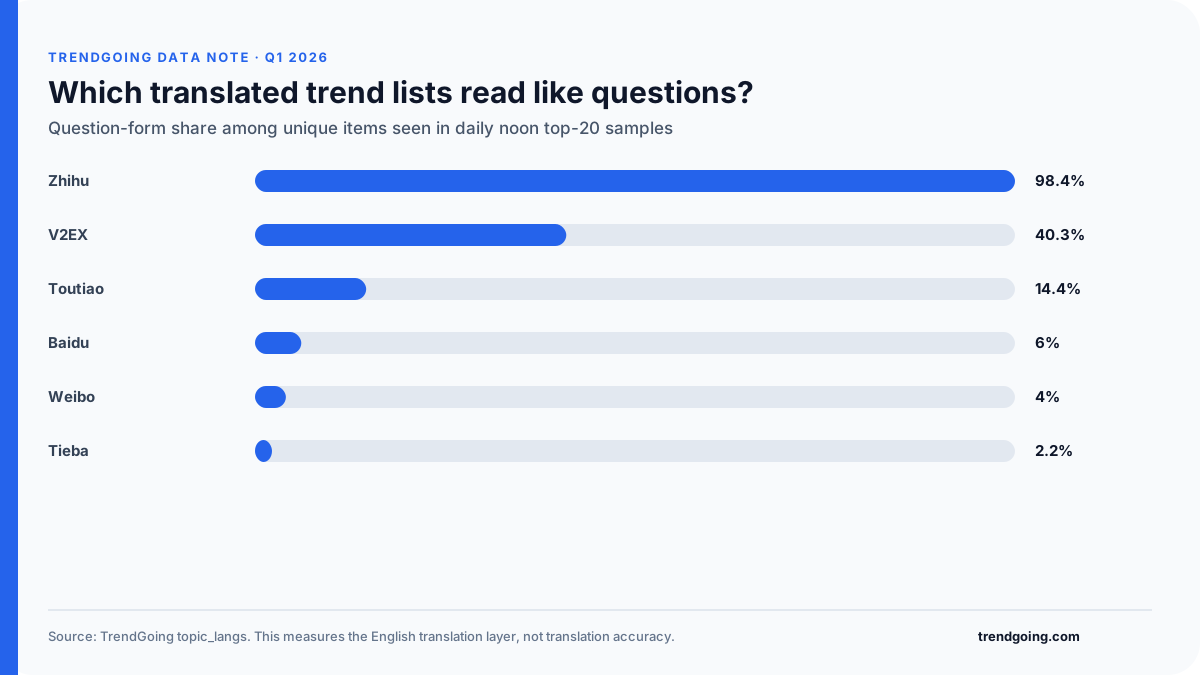
Some trend boards announce. Others ask. In TrendGoing's English translation layer, Zhihu produced the largest share of question-form labels in our Q1 noon sample: 98.4%.
The difference is visible before reading any answer. A question-shaped headline invites explanation, advice or debate; a statement-shaped headline presents an event or name to investigate. That grammar changes how a visitor approaches the list, even when both items occupy the same rank.
How we recognized a question
We built one set of unique item IDs from the top 20 nearest noon on each calendar day. We then used the available topic_langs.en label. A label counted as question-form when it ended in “?” or began with words such as what, why, how, who, can, should or does.
| Source | Labeled items | Question-form items | Share |
|---|---|---|---|
| Zhihu | 1,011 | 995 | 98.4% |
| V2EX | 1,800 | 726 | 40.3% |
| Toutiao | 1,794 | 259 | 14.4% |
| Baidu | 1,800 | 108 | 6% |
| 1,759 | 71 | 4% | |
| Tieba | 1,510 | 33 | 2.2% |
This deliberately simple rule misses indirect questions and can misclassify unusual phrasing. It is transparent enough to rerun, however, and it avoids subjective hand-labeling after seeing which platform wins.
The result describes our translation layer
The original 2026 topic rows and source URLs are not fully present in the local archive. We therefore cannot use this sample to score translation quality or claim that every English sentence preserves the exact punctuation of its original Chinese title. The chart describes how the saved English labels read to a TrendGoing visitor.
That limitation is also a product lesson. Translation does more than replace words. It can preserve or flatten the invitation built into a headline. A future audit should pair original and translated titles, then ask human reviewers whether the intent survived.
Why question-shaped trends deserve a different reading habit
A popular question proves that people are engaging with the question, not that one answer is settled. When a question enters a ranking, open the discussion, check the date and look for competing explanations. Treat the wording as evidence of curiosity, uncertainty or disagreement.
Statement-shaped items require their own caution. A compact translated label can omit attribution or context. In both cases, the ranking supplies discovery; the linked source and independent reporting supply verification.